
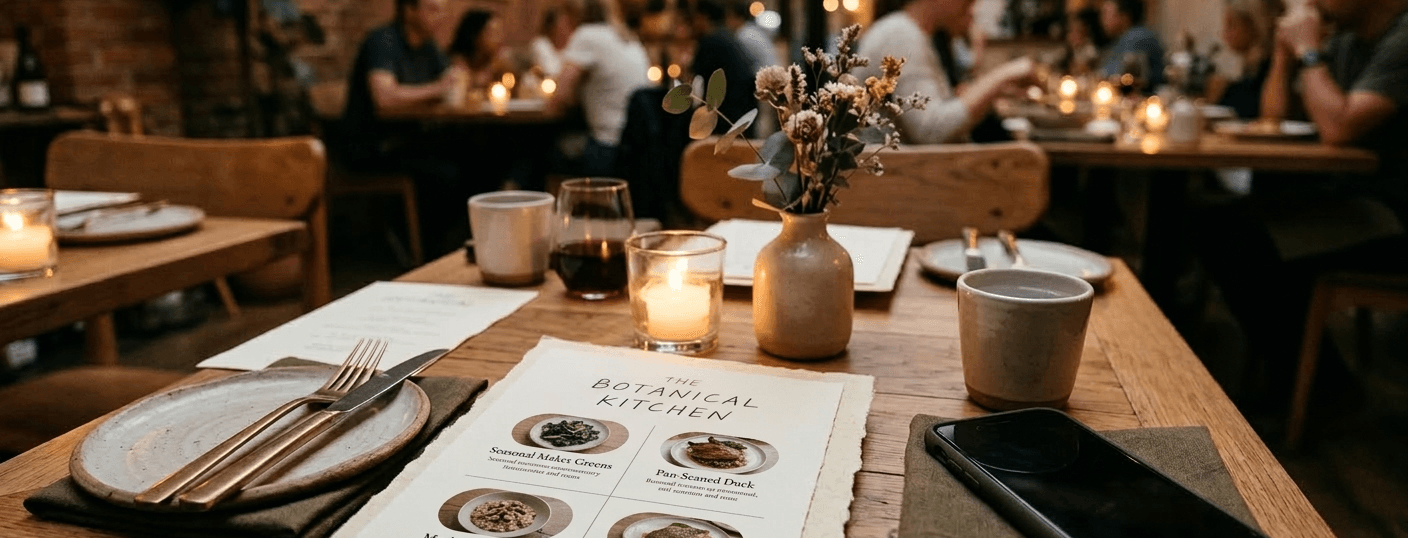
Menu Strategy
Paper Menus for Guests, Digital Control for Operators
Printed menus still suit the dining experience many guests want, but digital menu workflows help operators update faster, stay accurate, and work more efficiently.
15 March 2026
Restaurants do not really have a “paper versus digital” problem.
They have hospitality challenges, operational challenges, and increasingly, staffing challenges. The menu sits right in the middle of all three. Guests still want a pleasant, easy dining experience, especially in sit-down restaurants. Operators, meanwhile, need menus that are easy to update, easy to share, and easy to keep accurate. Current industry research suggests both sides are right: diners often still prefer printed menus in full-service settings, while operators see technology as a practical advantage when it improves convenience and efficiency.
That is why “digital or paper?” is usually the wrong question. A better question is: which parts of the menu experience should stay tactile and human, and which parts should become easier to manage digitally? The National Restaurant Association’s 2024 technology research makes this distinction quite clearly.[1] In full-service dining, it describes technology as largely “nice-to-have”, because people still value interaction with staff. In delivery, by contrast, technology is much closer to a baseline expectation.
Why paper menus still matter
It is easy to assume paper menus are old-fashioned. In practice, they still do several things very well.
A printed menu is immediate. It does not require a phone battery, a camera, a signal, a login, or the patience to zoom in and out of a mobile screen. In a sit-down setting, it can also feel more natural. The National Restaurant Association says that for most customers, engagement with employees is an integral part of the full-service experience and that most consumers do not appear interested in replacing that high-touch interaction with a completely tech-driven one.[1]
That broader preference shows up in third-party reporting too. Restaurant Business, citing Technomic survey data, found that the vast majority of diners in sit-down restaurants still prefer a physical menu over scanning a QR code.[2] Even if some guests are perfectly comfortable scanning a code, that number is a reminder that restaurant technology should not be introduced just because it exists. It still has to feel right for the occasion.
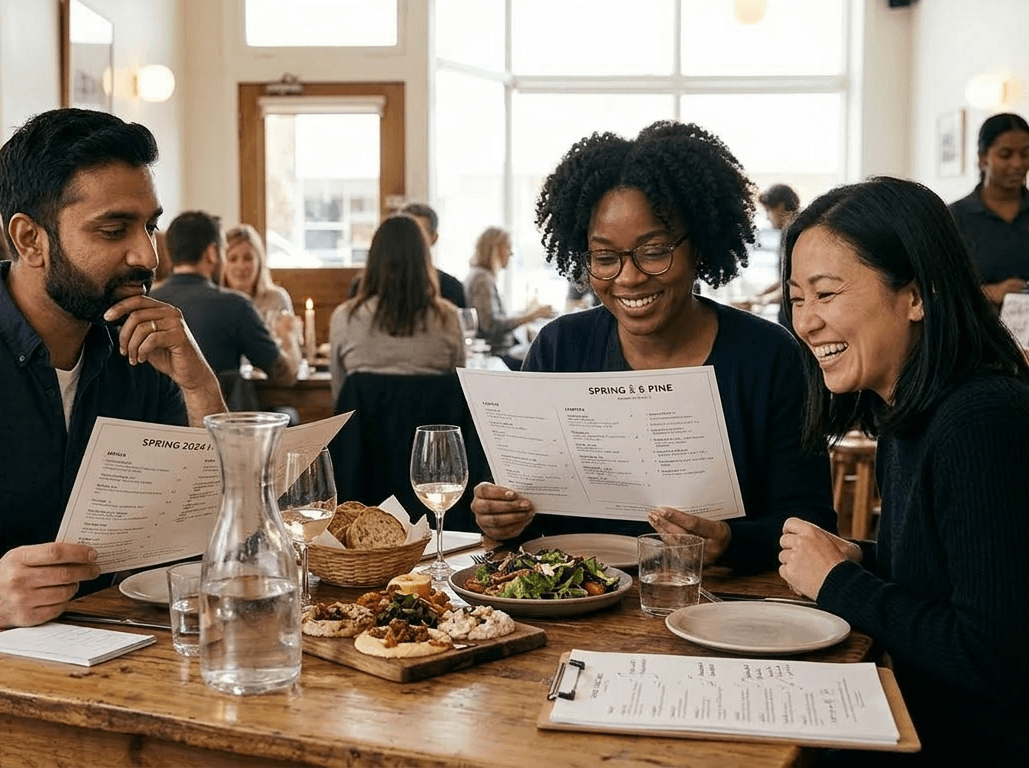
This is especially relevant for restaurants that want to create atmosphere, guide attention, or encourage shared browsing around the table. A good printed menu is not just a list of items. It is part of the dining experience.
Where digital menus have the edge
At the same time, operators have very real reasons to want more digital control.
Menus change. Prices move. Items sell out. Seasonal specials come and go. If every update means reworking a print file from scratch, chasing versions, or living with inaccuracies until the next reprint, that becomes an admin burden very quickly. The National Restaurant Association reports that 76% of operators say technology gives them a competitive edge[1], and the report repeatedly frames technology as useful when it improves efficiency, customer experience, and day-to-day operations.
The nuance is important here. Customers are not rejecting all technology. They are being selective about where they want it. In full-service restaurants, the Association found that 59% of customers said they would pull up a menu on their smartphone using a QR code, but fewer than half were comfortable using it to place an order (48%) or pay (46%).[1] That suggests diners may accept digital access to information more readily than a fully digitised table-service experience.
In other words: digital works best when it removes friction, not when it replaces hospitality.
The Singapore angle
This balance feels particularly relevant in Singapore.
CNA reported in 2024 that some restaurant owners are turning to technology to ease chronic manpower shortages, and specifically noted that mobile ordering allows restaurants to run with fewer employees per shift because staff can focus more on food running than traditional order-taking.[3] That does not mean every diner wants a QR-only experience. It does show why operators are under pressure to adopt tools that help them run leaner.
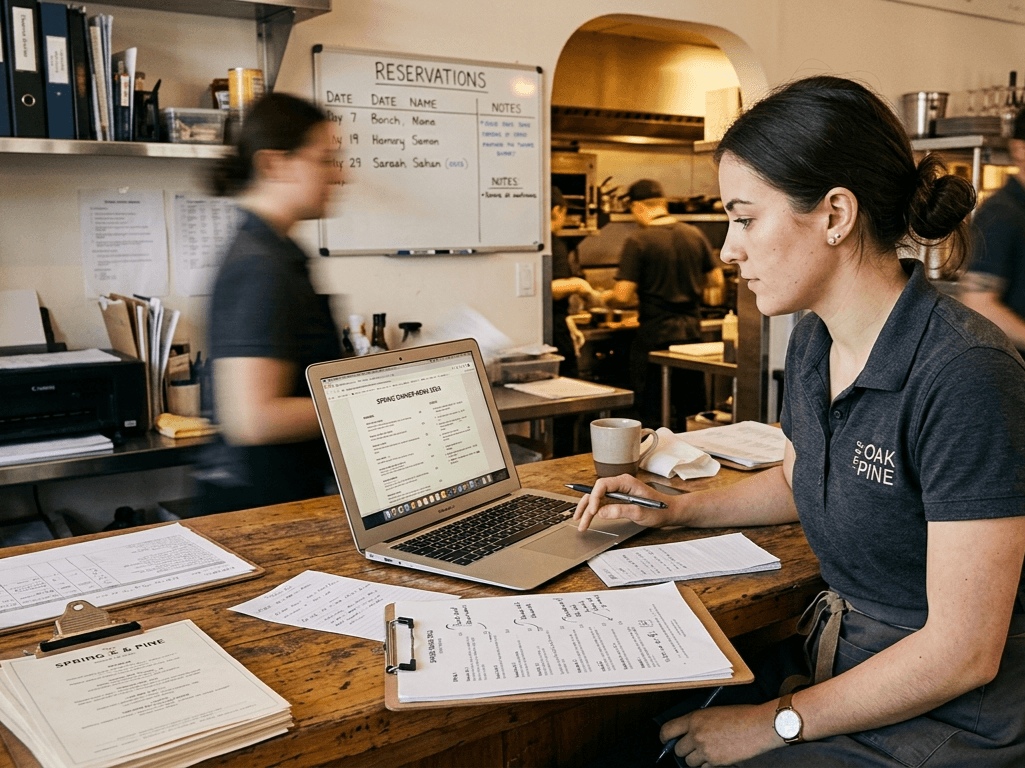
Put those two points together and the local picture becomes clearer: in Singapore, digital habits are already normal, and labour pressure is real. That makes digital menu workflows more attractive operationally, even if plenty of diners still prefer a polished printed menu on the table.
The real answer is not “paper or digital”
For most restaurants, the strongest answer is not to go all-in on one side.
Paper still works well for readability, ambience and ease of use in dine-in settings. Digital is stronger for speed of updates, version control, and keeping menu information current across different channels. The more sensible goal is not to force customers into a QR-only experience, nor to keep menu management trapped in a fully manual workflow. It is to let the guest experience stay smooth while making the operator’s job easier behind the scenes. That is broadly consistent with the National Restaurant Association’s recommendation[1] to fit technology to the customer base being served, rather than chasing technology for its own sake.
A restaurant may still want printed menus in the dining room, but also want the ability to update menu content quickly, reuse it elsewhere, and maintain consistency between print, web, social posts and promotions. Seen that way, digital is not the replacement for paper. It is the operating layer behind it.
Final thought
The restaurants likely to benefit most are not the ones asking whether paper menus are dead.
They are the ones asking how to keep the guest experience comfortable while reducing the effort required to create, update and maintain menu content. Paper and digital each solve different problems. The winners will usually be the operators who understand that and design accordingly.